


A renewed understanding of history
This novel takes us into sixteenth-century Morocco, when Safi, Marrakech, and the Doukkala became the stage for fragile alliances, conquests, and struggles for power.
At the heart of the novel stands Yahya u Ta’fuft, a dark and powerful figure caught between loyalty, ambition, violence, and necessity. Around him unfolds a world shaped by the Portuguese presence in Morocco, internal divisions, and the political reconfiguration of a kingdom under strain. I sought to bring this harsh and shifting era back to life for the reader, giving history the human depth of fiction. A sweeping work for readers drawn to Moroccan historical fiction, Safi, Portuguese Morocco, and the upheavals of the sixteenth century.


Yahya, The Berber Warrior
Whait does the book telle us ?
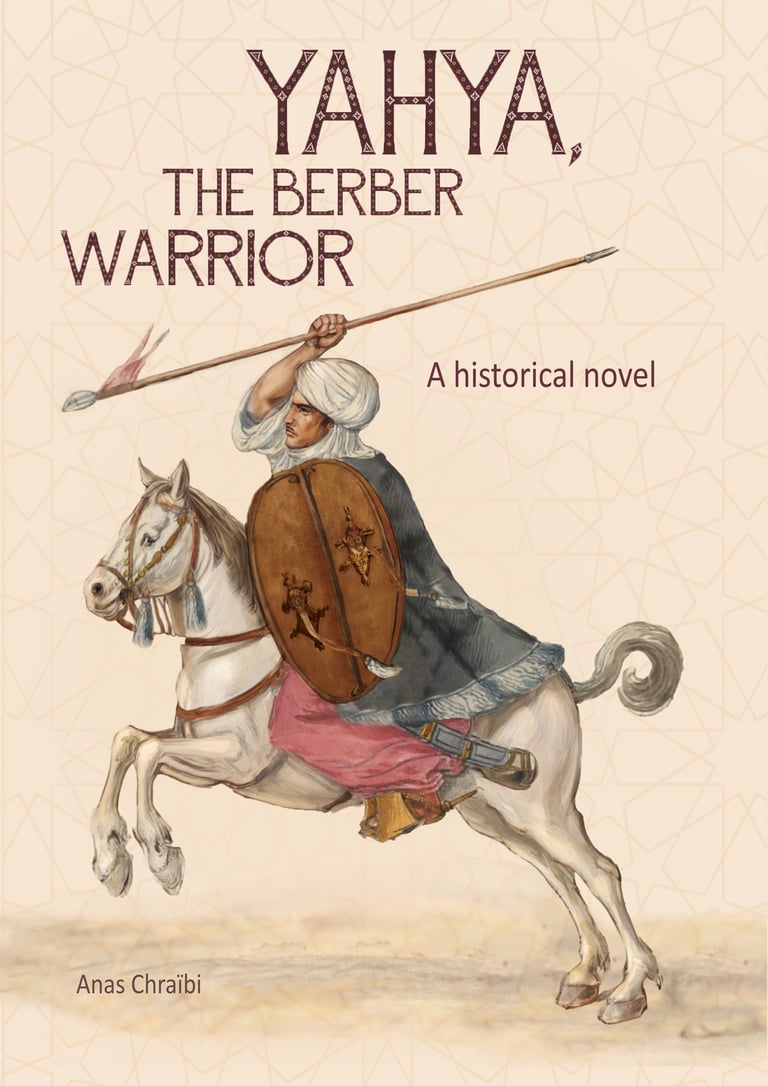
He could have changed the course of history, and yet who remembers Yahyā U Tā’fuft? In the sixteenth century, when this proud Berber became caïd of Safi under dubious circumstances, it marked the beginning of an undisputed rule over the region of the Dukkala. A formidable warrior, undefeated for a decade, he extended the empire of King Manuel I under Portuguese protection, all the way to the gates of Marrakech. He came close to taking the Hintati city in 1517, but it ultimately fell into the hands of the Zaydanids, the Moroccan dynasty better known as the Saadians. The rest is history. But what might have happened if Yahyā U Tā’fuft had achieved his goal—and what, exactly, was that goal
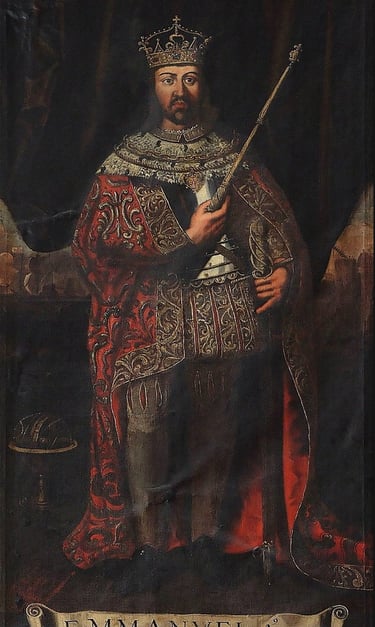
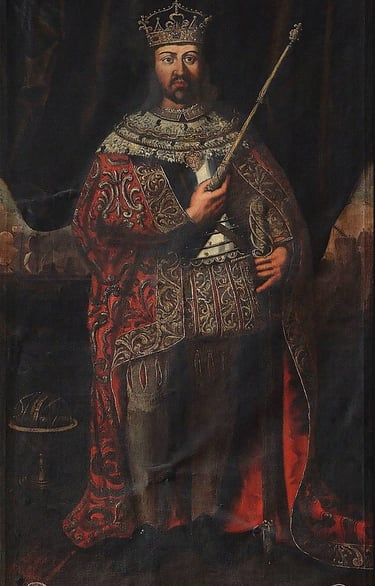
In that century of famine and plague, which decimated the population, Morocco was torn between three powers of unequal strength: in the north, a dying Wattasid dynasty; in the south, an emerging Saadian dynasty; and in the Dukkala, a Portuguese empire wielding overwhelming firepower. Under the caïdate of Yahyā U Tā’fuft, the city of Safi enjoyed a period of prosperity, spared for a time from hunger and tribal violence. King Manuel I of Portugal, moreover, trusted no one more than Yahyā for his human and military qualities in protecting both the region and Portuguese interests
Branded a Judas by some historians for his allegiance to the Portuguese crown, did the young Berber truly have a choice?
This novel tells the saga of a great yet little-known historical figure, and through him, the unbelievably harsh life of a people ready to do whatever it took to survive in the face of adversity.
Safi- The City Where It All Begins
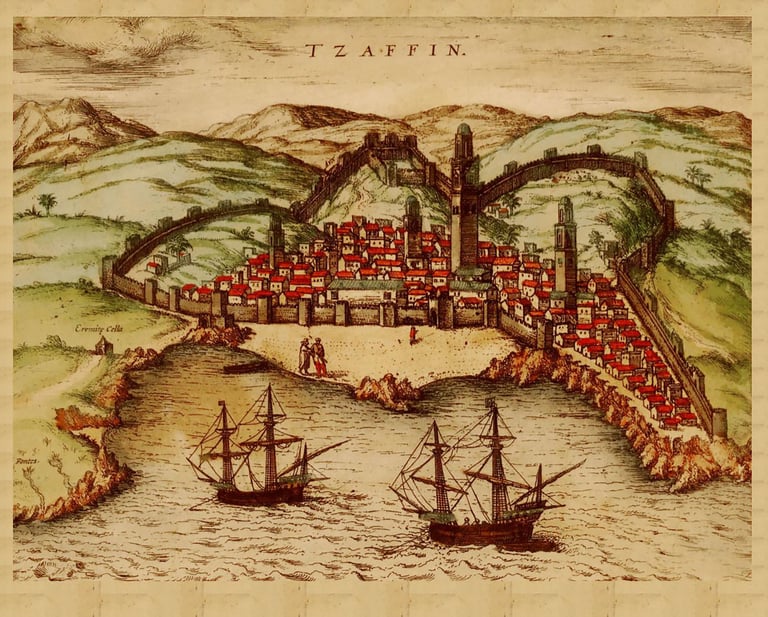
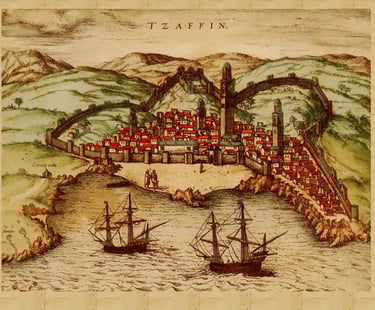
This remarkable depiction of the city of Safi reveals the city’s original outlines. Its walls and perimeter appear far more extensive than those preserved by the Portuguese during their occupation. One also notices the presence of only four mosques, a number clearly lower than in the illustration of Azemmour, where places of worship are far more numerous
There is no sign of a structured port: ships anchored offshore, while small boats shuttled back and forth to load and unload goods.
The Great Mosque of Safi was destroyed and desecrated, before a cathedral was built on its site by the Portuguese. That cathedral was later destroyed in turn… by the Portuguese themselves, who feared that it too would be desecrated. A few remains, still visible today, bear witness to this turbulent history.
Yahya’s Portugal
A privileged relationship with Manuel I
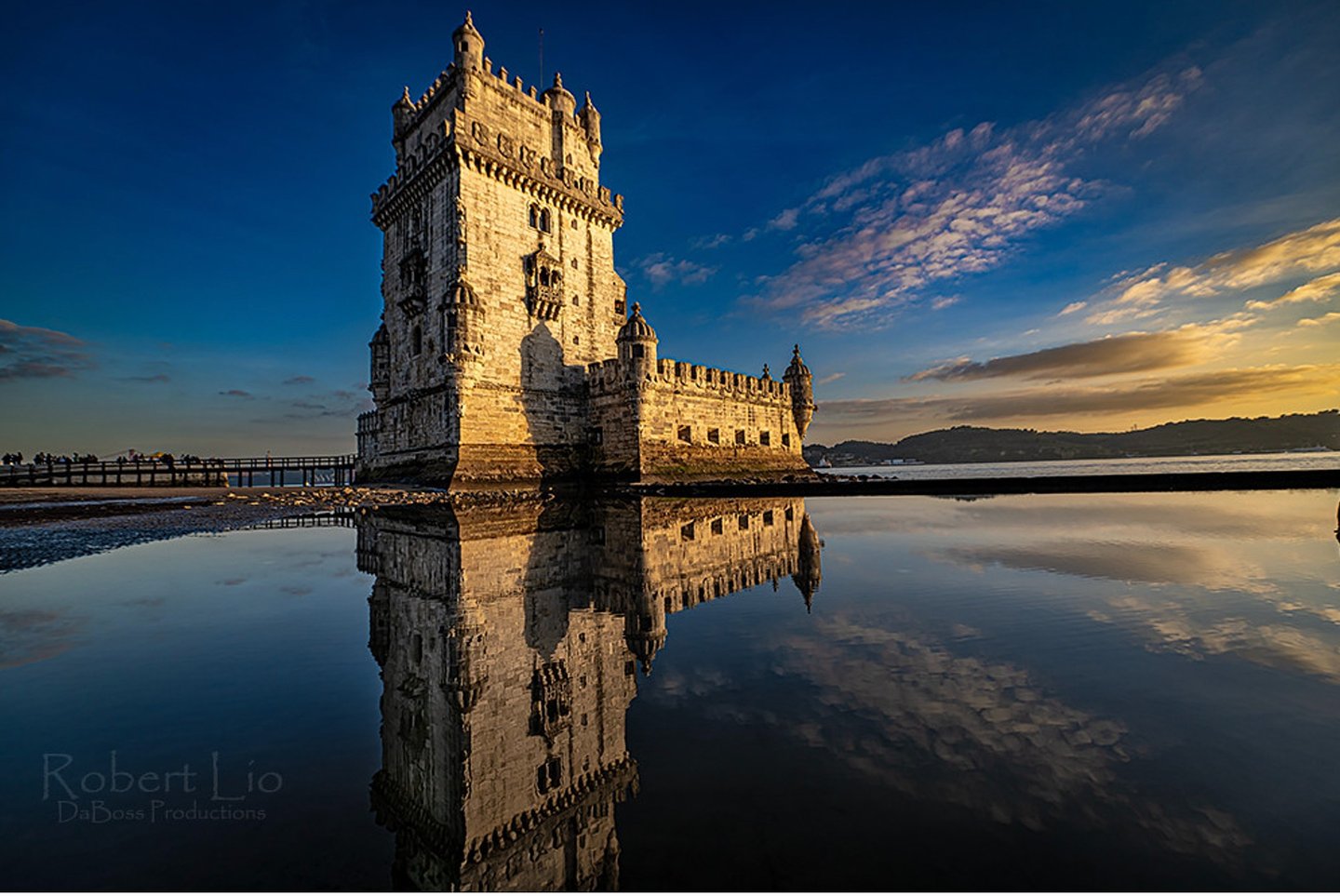
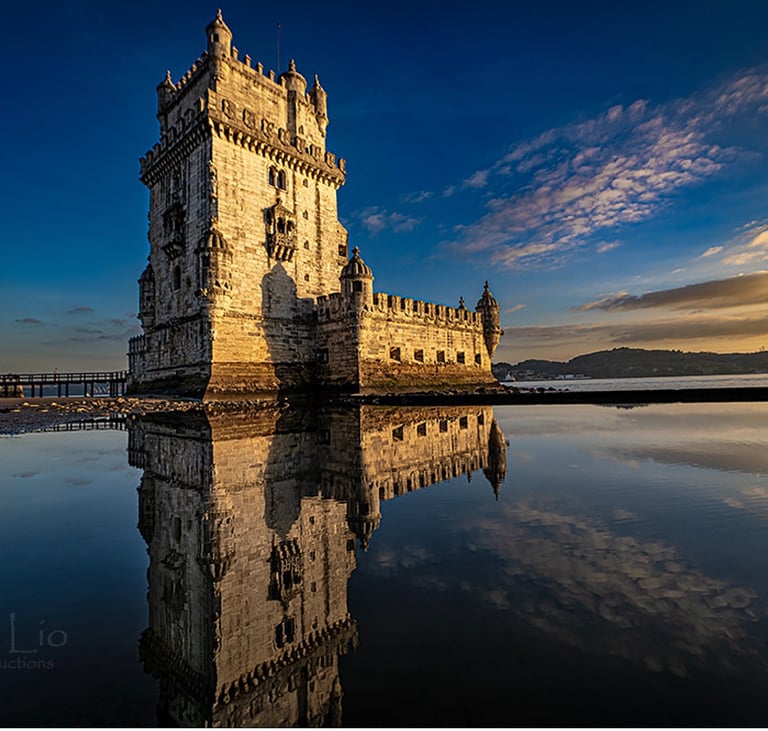
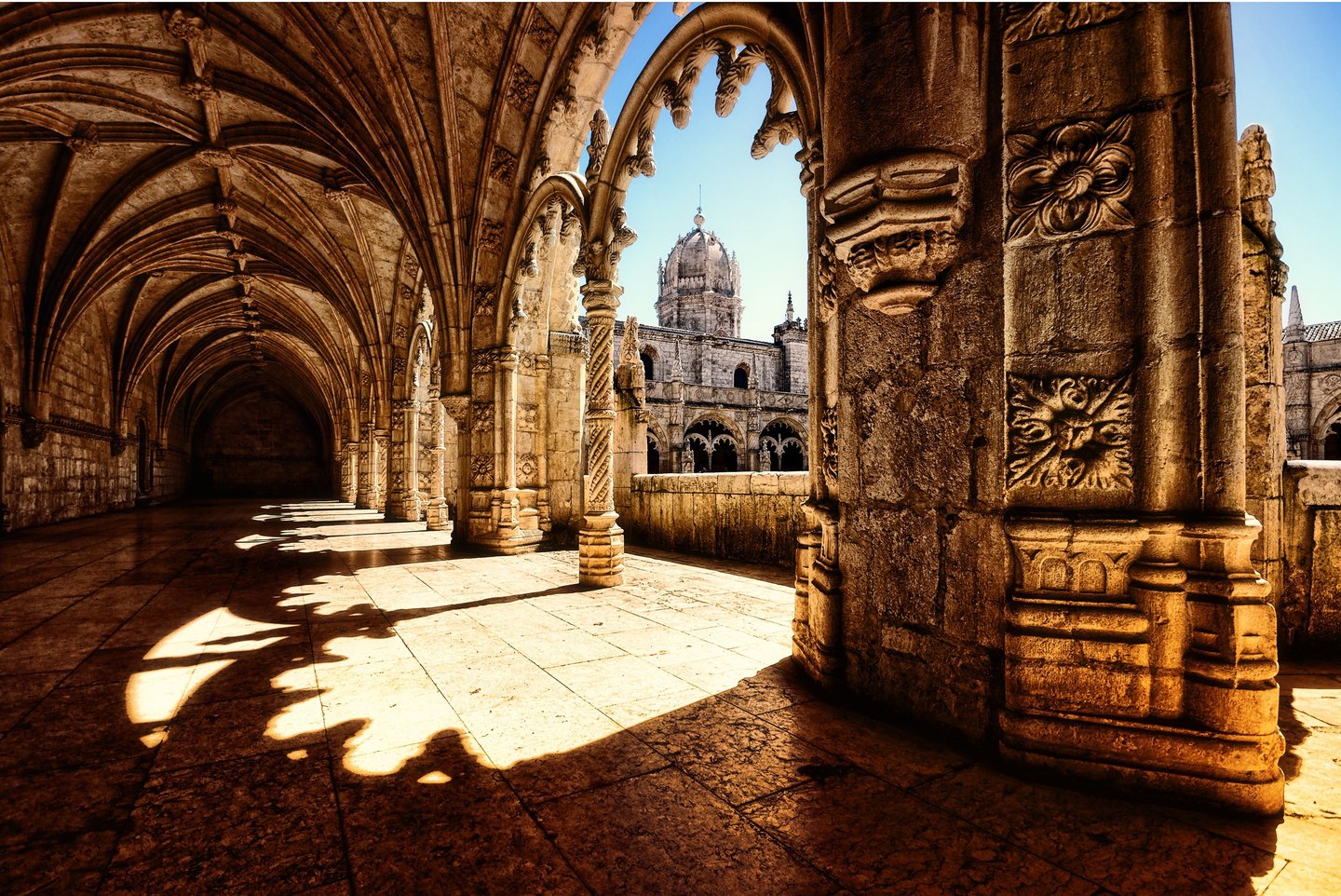
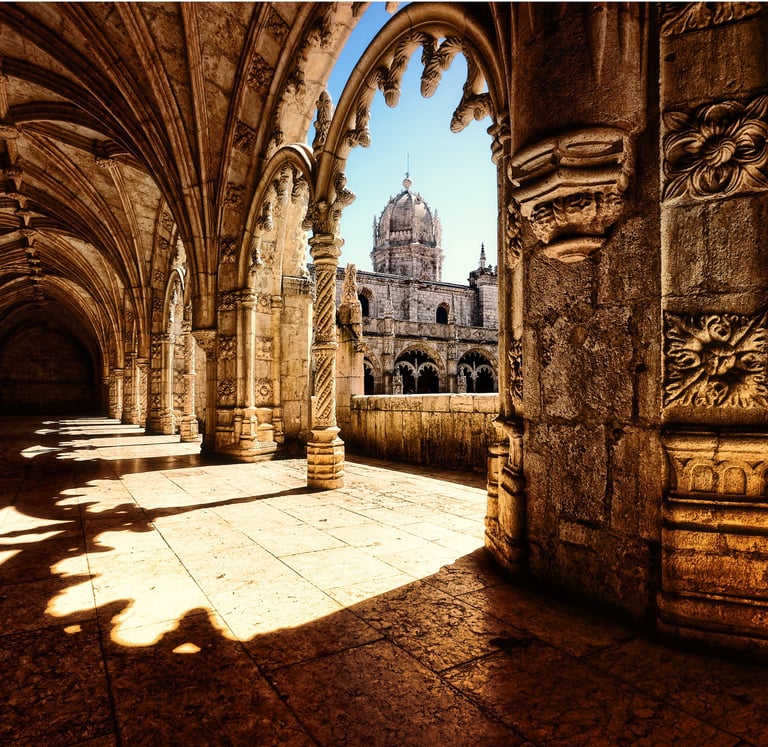
After four months of intense and secret preparations, King João I of Portugal and his sons—Edward, Henry, and Peter—launched a surprise attack on the city of Ceuta, in northern Morocco, on August 21, 1415. The significance of the conquest matched the risks involved: enormous military and naval resources were deployed, and an imposing fleet of 250 ships carrying 50,000 men captured the city in just twenty-four hours, before abandoning it to looting.
For centuries, the city had served as a strategic maritime trade route with Europe, particularly for Andalusia, the Genoese, the French, and the English. Under the leadership of the learned Al-Azafi dynasty, the free city had enjoyed outstanding intellectual and commercial prosperity, as an essential stop for caravans laden with gold from the Sudan on their way to Europe.
This victory allowed the small kingdom, which had only 1.5 million inhabitants, to break out of a political deadlock. It was the ideal way to offer new territories to conquer to an increasingly restless chivalric class, to find a solution to the inflation that was dangerously undermining the country, and to check the growing hegemony of neighboring Castile. The surprise was total on both sides of the Mediterranean. Ceuta went into decline, and the massacres of the surrounding populations that followed were only the prelude to an expansionist policy in a Morocco already torn by serious internal wars.Thanks to their spies, the Portuguese had anticipated the slow disintegration of Marinid power as early as 1380. Between 1358 and 1465, seventeen sultans succeeded one another—sometimes more than once—often assassinated or deposed. This chronic instability strengthened the power of viziers and military leaders, plunging the kingdom into a deep crisis.
The Maâmora battle- 1515
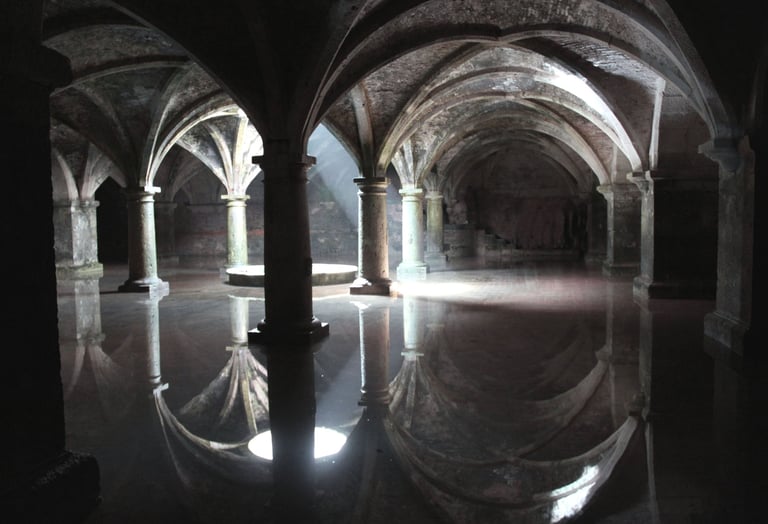
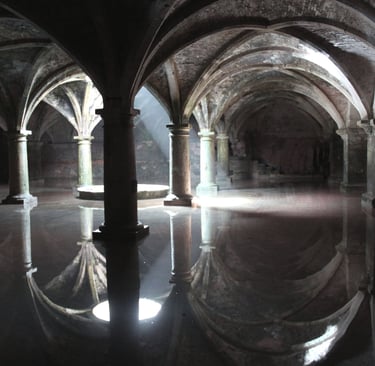
Over the centuries, the cistern has remained intact, inhabited by silence and shadow. Its striking atmosphere has fascinated many artists and filmmakers, including Orson Welles, who shot memorable scenes of his Othello there.
An architectural masterpiece: With its almost perfect proportions—a square measuring about 33 meters on each side—the hall rests on five rows of five massive stone pillars, forming a forest of columns from another age. Built in the Manueline style, a late and refined form of Portuguese Gothic, it conveys both power and elegance.
But what truly makes it a magical place is the thin sheet of water covering the floor. Through the round opening at the center of the ceiling, a single shaft of light finds its way in, reflecting on the water and setting the columns alive with shifting shadows. Every visit becomes a sensory experience, suspended between silence, flashes of light, and the whispers of history.
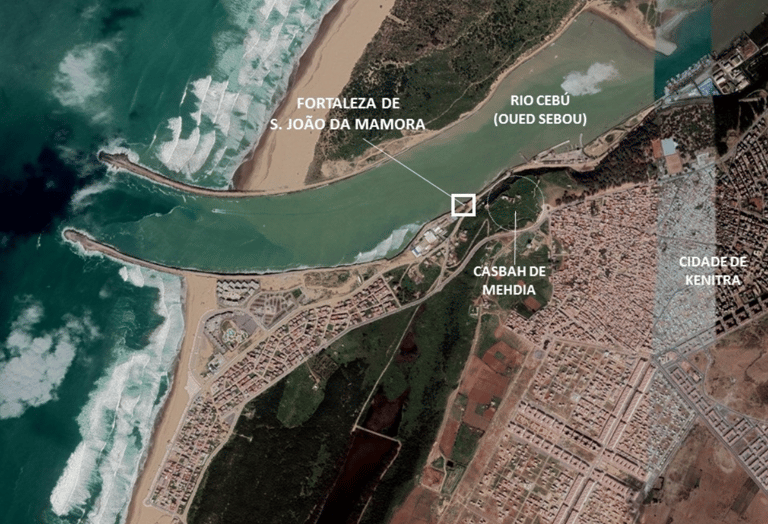
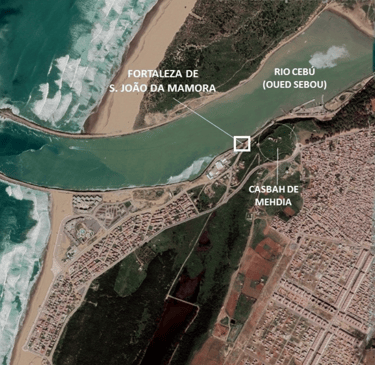
The Battle of Maâmora (1515) — The Day the Sea Turned Red: King Manuel I, eager to create a flashpoint with the Kingdom of Fez, ordered the construction of a new fortress at the mouth of the Sebou River. The chosen site was Maâmora, modest yet strategic, and two earlier expeditions, in 1507 and 1514, had already revealed its importance.
Portuguese audacity: On June 13, an imposing fleet left Lisbon: 200 ships, 8,000 men—soldiers, but also settlers, craftsmen, and dreams of conquest and glory. At its head was an experienced nobleman, António de Noroña. Ten days later, the white sails appeared on the horizon. The landing met with no resistance. A wooden castle quickly rose, the foundations of the fortress were laid—but in haste, too close to a hill, vulnerable to an attack from above.
The Moroccan response: Informed of the intrusion, Sultan Mohammed al-Burtuqâlî sent his own brother, Moulay Nacer, governor of Meknes, at the head of 30,000 infantry and 3,000 cavalry. With them came six cannons—a promise of thunder. As early as July 19, the Moroccan cavalry attempted an assault. It was repelled. But the artillery, stationed not far away, aroused Portuguese interest. Learning that it was lightly guarded, António de Noroña launched a lightning attack: 1,200 men seized the six cannons, taking advantage of a moment of negligence. But the victory was short-lived.
As the Portuguese were bringing their prize back to camp, the Moroccan army descended upon them like a swarm. The Portuguese squadron, at first disciplined, began to waver. Panic spread through the ranks. Some fled, others threw down their weapons, deceived by voices speaking Spanish—Andalusian renegades—promising safe conduct to those who surrendered. It was a massacre. Around fifteen officers were taken prisoner, and the bodies littered the sandy ground of Maâmora.
The noose tightens
Moulay Nacer positioned his troops on the hill overlooking the Portuguese position. Cannons were aimed at the fortress, others at the mouth of the river. The objective was clear: cut the Portuguese off from their fleet, starve them, and reduce them to helplessness.
One ship attempted to break the blockade. It was sunk without mercy. The situation in the Portuguese camp became critical. Supplies were running low, ammunition as well. Men were falling, not only to enemy blows, but also to the invisible assaults of disease and discouragement. Quarrels broke out among the commanders, each accusing the other of having poorly chosen the site of the fortress.
Disaster for the Portuguese
On August 10, the order to evacuate was given. It was too late. Embarkation took place in chaos. Many were killed before they even reached the ships. Low tide prevented the vessels from maneuvering. Some ran aground, others sank. Within a few hours, the river became a floating graveyard. Nearly 4,000 Portuguese dead and around one hundred ships lost were counted. For the Moroccans, it was a resounding victory. They recovered more than 400 cannons and considerable booty. For the Portuguese, it was a trauma. The event entered their history under the name of the “Disaster of Maâmora.”
Leo Africanus, who witnessed the events, wrote:
“The ships were burned, and the artillery went to the bottom, with so great a slaughter of Christians that the sea was stained red for the space of three days.”
A turning point
This defeat brought Portugal’s dreams of expansion in Morocco to a brutal halt. On the Moroccan side, it rekindled the spirit of resistance and jihad against the Christian forces. The following year, the sultan used the cannons captured at Maâmora to besiege the city of Asilah. Maâmora remains, forever, a name etched in the memory of the defeated—and sung in the glory of the victors. The Portuguese Cistern of El Jadida is one of the hidden jewels of Morocco’s heritage. Buried beneath the citadel of the former fortified city of Mazagan, it reveals itself as a place outside time, filled with mystery and beauty. Listed as a cultural heritage monument in Morocco, it is also part of the prestigious UNESCO World Heritage.
An enigmatic history : Built in 1514 by the Portuguese beneath the citadel—their first permanent settlement on this site—the underground chamber was not originally a cistern. Was it an arsenal, a barracks, or a granary? The question remains open. It was only in 1541, during the enlargement of the fortress, that the room was turned into a water reservoir. The plans were designed by the architect Miguel de Arruda, but the construction was entrusted to João de Castilho, one of the most renowned master builders of the time.
The Monastery of the Hieronymites
Bélem Tower
Mazagan — The Portuguese Cistern
Grenade - Chapitres 10 & 11
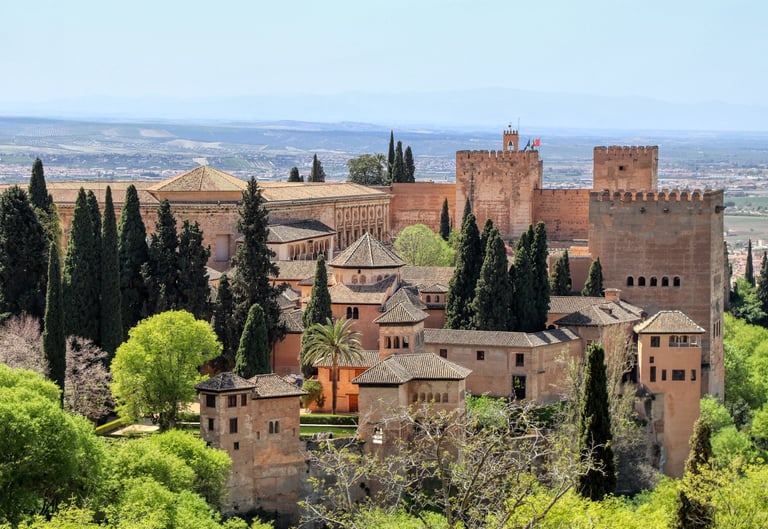
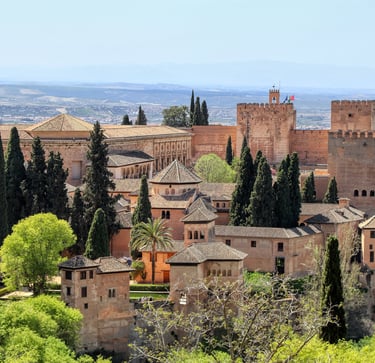
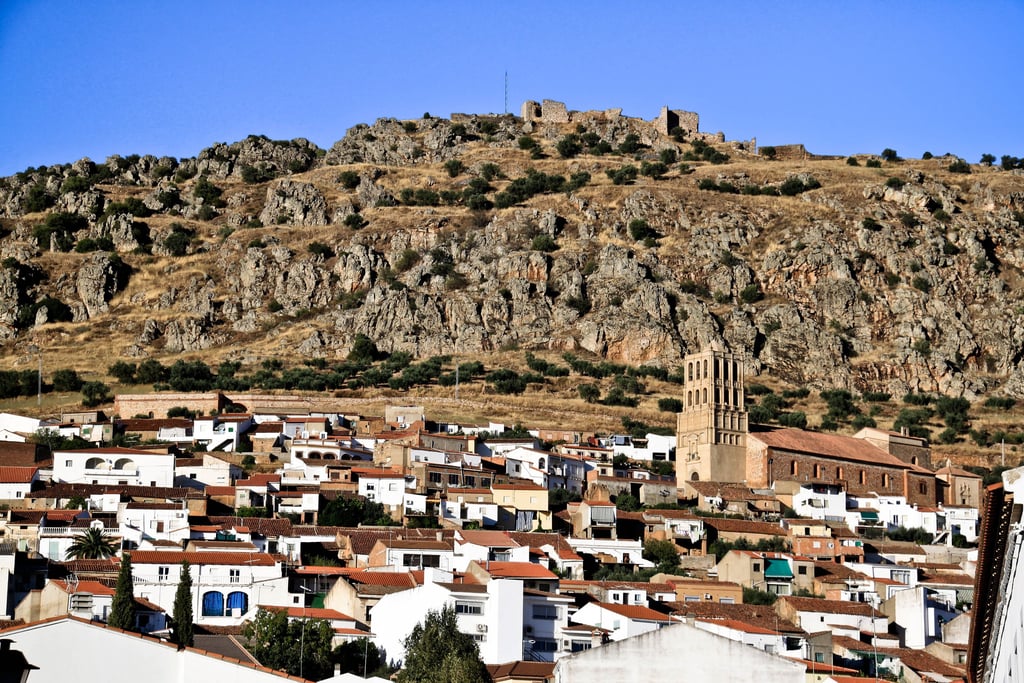
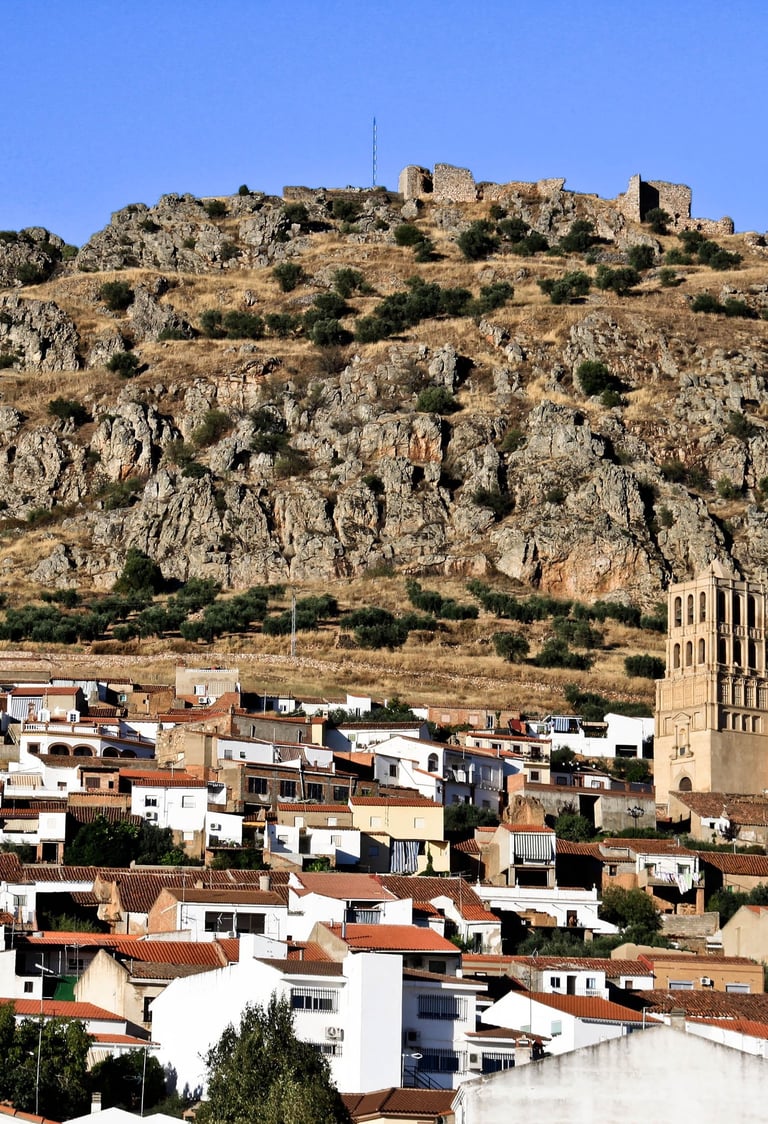
My Moroccan readers have often told me that this part of the novel is the one they found most captivating or moving. I invented it entirely, since nothing proves that Yahya ever went to Andalusia. But he did spend a great deal of time in Portugal, and I thought I would send him on a brief journey to the neighboring Castilian lands.
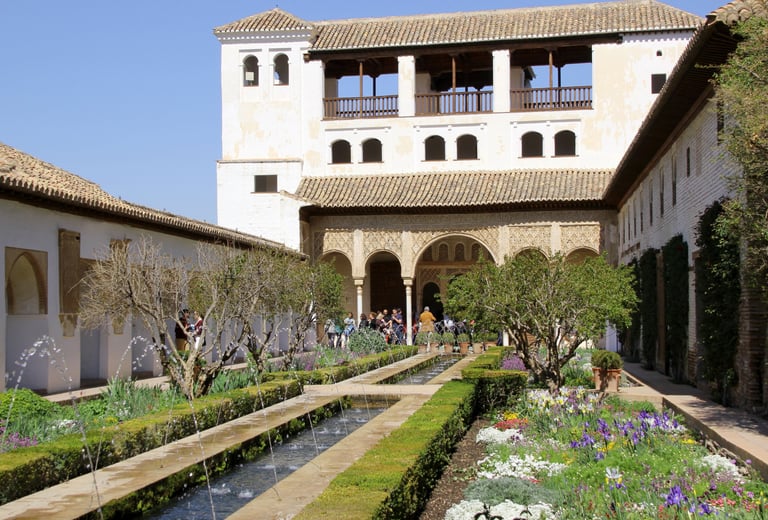
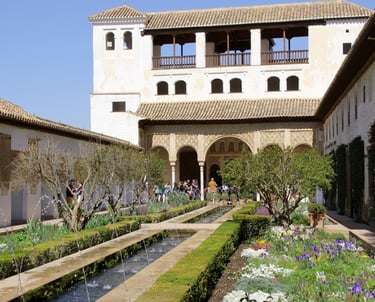
Water was brought to the Generalife by the Acequia Real (also known as the Acequia del Rey or Acequia del Sultán), which also supplied the Alhambra as a whole, and much of which still survives today. It drew water from the Darro River upstream, in the foothills of the Sierra Nevada, about 6.1 kilometers east of the Alhambra. A secondary branch, known as the Acequia del Tercio, split off from it several kilometers upstream and followed a higher route before reaching the Generalife near the present-day Pabellón Romántico, thereby supplying water to the upper gardens, the Water Stairway, and the old hammam. The main branch, which followed a lower route, also reached the Generalife palace and supplied the Patio de la Acequia.
The irrigation channels were generally open-air, though some sections ran through tunnels carved directly into the rock. These channels, combined with a complex hydraulic system of reservoirs and waterwheels, made it possible to supply and distribute water throughout the gardens.
One element of this hydraulic complex, the Albercones, consists of a medieval reservoir capable of holding 400 cubic meters of water, used to irrigate the orchards and gardens situated at a higher level. It is located on the heights above the present-day Jardines Nuevos. Two modern reservoirs also stand beside it today: one built by Torres Balbás in 1926, and another added by Prieto Moreno in the 1930s. The reservoir was supplied by a well 17.4 meters deep, located on a platform at its southwest corner. This well was originally topped by a rammed-earth tower, inside which an animal-powered waterwheel was used to draw water. The well opens into an underground gallery or channel whose lower opening is near the present-day Paseo de las Adelfas. This gallery drew water directly from the Acequia Real as it passed near the gardens, as well as from the higher Acequia del Tercio, which crossed it. The two channels then continued beyond the Albercones and rejoined before returning toward the Alhambra, where the water entered through an aqueduct near the Torre del Agua, at the eastern end of the Alhambra.
The Generalife (pronounced in Spanish: [xe.ne.ɾa.ˈli.fe]; Arabic: جَنَّة الْعَرِيف, romanized: Jannat al-‘Arīf) was a summer palace and rural estate belonging to the Nasrid rulers of the Emirate of Granada, in al-Andalus. The most commonly cited etymology for the name “Generalife” is that it derives from jannat al-‘arīf (Arabic: جَنَّة الْعَرِيف), which, depending on the interpretation, may mean: “Garden of the Architect,” “Garden of the Artist,” “Garden of the Gnostic,” or even “Garden of the Flautist.”
An earlier form of the name, recorded in the sixteenth century by Luis del Mármol, was Ginalarife, which J.D. Latham considers an indication that the first word was originally jinan (Arabic: جِنَان), the plural form derived from the same root, rather than jannat. The original name of the Generalife may therefore have simply meant something like “the principal orchard.”
An ornamental inscription by Ibn al-Yayyab inside the palace refers to it as Dar al-Mamlakat as-Sa‘īda (House of the Happy Kingdom).
Works cited
Bibliography
Bouchareb, Ahmed. Doukkala et le colonialisme portugais jusqu’à l’année de l’évacuation de Safi et d’Azemmour. University of Fez, 1984. In Arabic.
Cenival, Pierre de, ed. SIHM – Les sources inédites de L’histoire du Maroc. First Series, Saadian Dynasty, vols. 1–2. Archives and Libraries of Portugal. Paris: Paul Geuthner.
Cenival, Pierre de, trans. and annot. Chronique de Santa-cruz du cap de gue (Agadir). Publications of the Historical Section of Morocco, Documents on Moroccan History and Geography. 16th-century Portuguese text.
Góis, Damião de. Crónica Do Felicissimo rei D. Manuel. New edition based on the first, annotated and with a preface, edited by J. M. Teixeira de Carvalho and David Lopes. Part I. Coimbra: Imprensa da Universidade, 1926.
Justinard, Louis. Propos du chleuh. In memory of Pierre de Cenival. Poèmes berbères. Aguedal, 1937.
Marmol, Caraval de. De l’Afrique. French translation by Sieur d’Ablancourt. Paris, 1677.
Rosa, Maria de Lurdes, and Miguel Aguiar. La noblesse dans la frontière nord-africaine (Portugal, 1415-1515) : guerre, chevalerie, croisade.
DOI: 10.4000/e-spania.28615
Rosenberger, Bernard. Le Portugal, le Maroc, l’Océan, une histoire connectée. Historian, Montpellier, France.
Rosenberger, Bernard. Yahyā U tafuft - Des ambitions déçues (1506-1518). Hespéris-Tamuda, vol. 31, single issue, 1993.
Le Portugal et le sud du Maroc : contacts et conflits (xve-xviiie siècles). Vol. I, Studies. CHAM, FCSH, Universidade NOVA de Lisboa.
Moha ou Hamou, guerrier berbère. Casablanca: Éditions G. Gauthey.
Portugal e o Magrebe. Proceedings of the 4th Colloquium on Moroccan-Portuguese History. CHAM-FCSH, 2011
Torres, Diego. Relation de l’origine et succès des chérifs et l’Etat des Royaumes de Maroc, Fès et Taroudant. French translation. Paris, 1636.
Benhima, Yassir. Safi et son territoire. Une ville dans son espace au Maroc XIe-XVIe siècle. Paris: L’Harmattan.
Gavin Maxwell : El Glaoui - Dernier seigneur de l'Atlas