


Anas Chraïbi, Moroccan novelist.
★★★★★

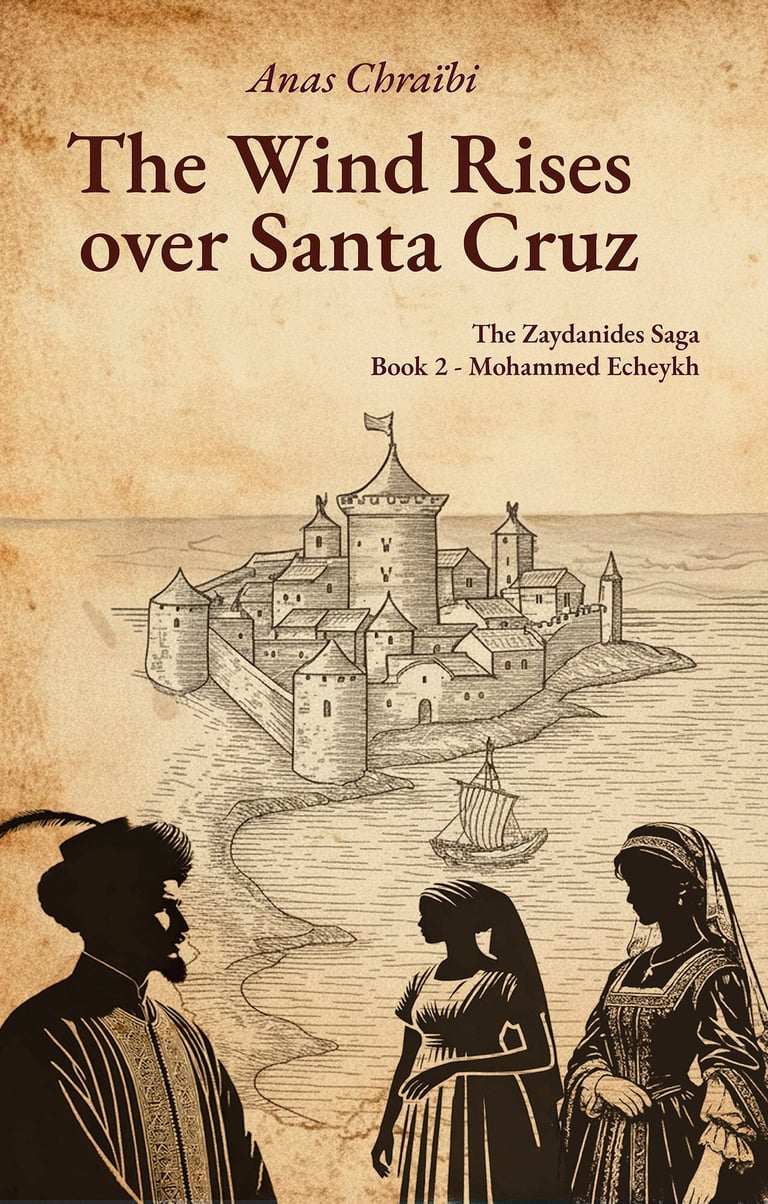
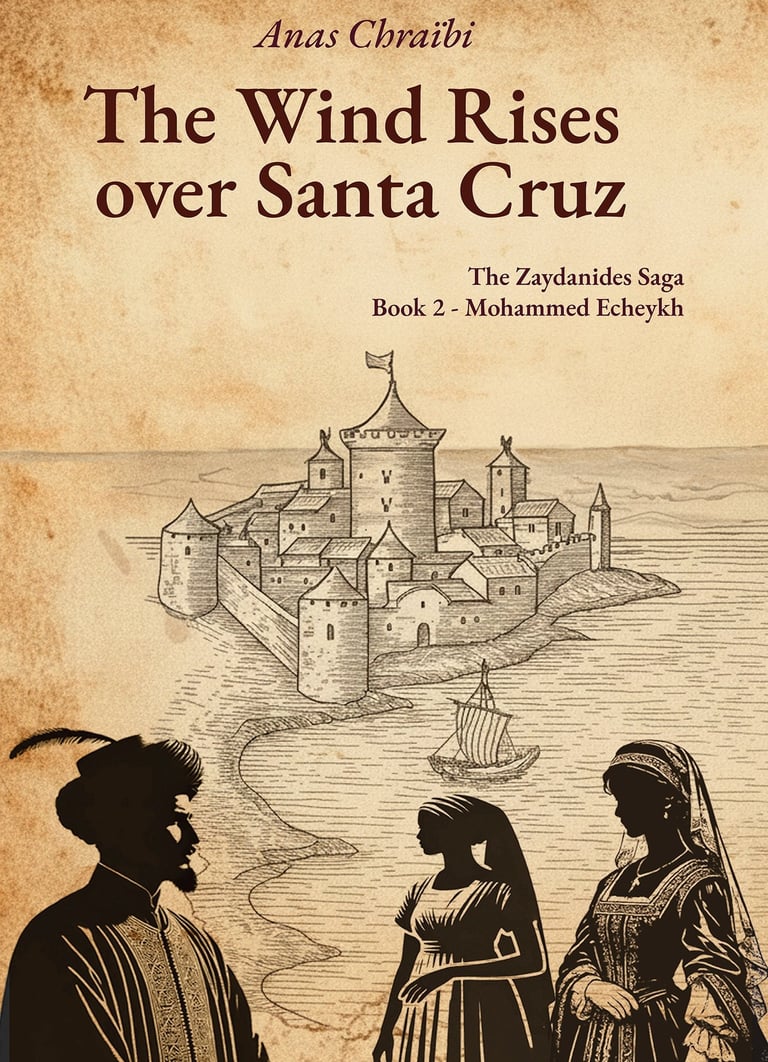
Historical novels about 16th-century Morocco and the Mediterranean, told from the southern shore.
Jocelyne Dakhlia - Emeritus Director of Research at the École des Hautes Études en Sciences Sociales (EHESS)
"Your two historical works delighted me. I admire the way you manage to give flesh to archives that can sometimes be austere, and to do so in a way that rings profoundly true. That implies great mastery and a vast amount of reading behind the creation of these characters!"
A world on the brink
Medi1TV - 17 June 2026 - Myriem Khamlichi

Livre - moi Rabat : Thursday Novembre 5 2026 · 19 h
- Moderator Jamal Azouaoui
Marrakech - decembre 17 2026 · 19 h
Institut français de Marrakech
I will give you Marrakech- Free entrance
Conference cycle


“True history is intertwined with everything. It is bound up with everything. The true historian is interested in everything.” — Victor Hugo, Les Misérables
Yahya, the berber Warrior - (Je te donnerai Marrakech) retraces the little-known fate of Yahyā U Tā’fuft, a sixteenth-century Berber caïd of Safi, a forgotten figure in Moroccan history. Under the banner of King Manuel I of Portugal, he built a feared power base in the Doukkala region, protecting the area for a time from famine and tribal wars. A strategist and undefeated warrior, he reached the gates of Marrakech in 1517, without ever entering the city. This novel explores what history left unspoken, in a Morocco divided between the Wattasids, the Saadians, and the Portuguese colonizers. Branded a traitor for his alliance with Lisbon, Yahyā is presented here not as a Judas, but as a man torn between survival, loyalty, and ambition. Through his epic story, Anas Chraïbi delivers a powerful fresco of a country in agony, of the choices imposed by the violence of the world, and of the possibilities that never came to pass. -
“Je te donnerai Marrakech” – Qitab – July 25, 2025
“A powerful, deeply inhabited fresco, poised between historical rigor and the breath of fiction.” Mouna Hachim



“A cinematic novel. This book reads like a film unfolding on the screen.” — Gérard Poupon
“The images flow one after another, the pace is gripping, and the variety of situations constantly holds the reader’s attention. Intrigue, battles, and human conflicts follow one another masterfully. A true page-turner, combining visual spectacle with historical depth.”
Get in touch
Feel free to get in touch
Who am I?
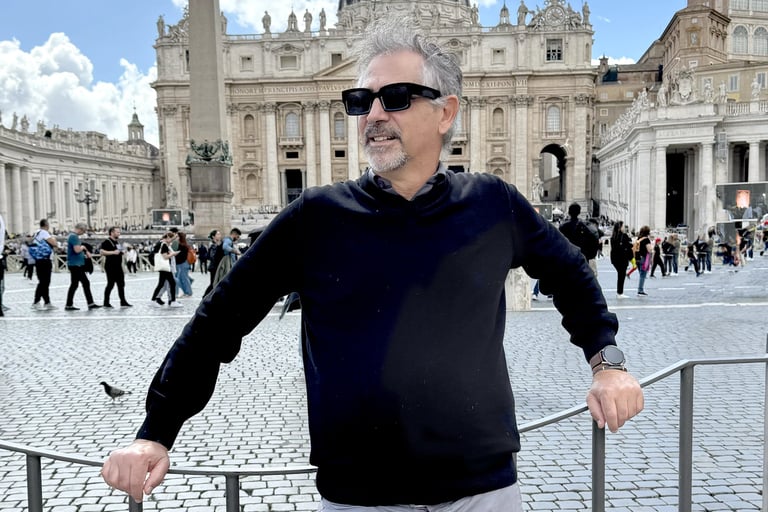
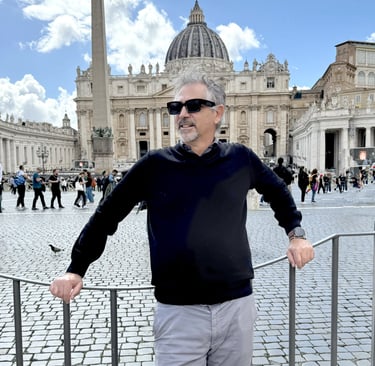
I am Anas Chraïbi, a Moroccan novelist. Through my historical novels, I explore sixteenth-century Morocco and the Mediterranean world where the Maghreb, Portugal, Spain and the Ottoman Empire converged.
Yet I come from neither history nor literature. I am an entrepreneur and co-founded two printing companies in Casablanca, Directprint and Flexoprint. For thirty years, I printed other people’s words. Then, a few years ago, I felt the need to understand the history of my country more deeply. Not simply the great dates and dynasties we learn about at school, but the people behind them: forgotten lives, choices, ambitions, fears and contradictions.
I joined Histoire Vivante du Maroc, a group of enthusiasts who share the conviction that our history deserves to be better known, shared and passed on. I immersed myself in sixteenth-century Moroccan and Portuguese chronicles, archives and the works of historians. Little by little, figures almost erased by time began to come back to life.
That is how I came to fiction. History gave me the facts; fiction allowed me to get closer to the people. I discovered the pleasure of imagining a scene, a conversation, a moment of hesitation—all those things the chronicles do not record, but which allow us to experience an era rather than simply know about it.
One question soon became particularly important to me: the place of women. In sixteenth-century sources, they are rarely visible. Sometimes they are given a few lines, sometimes just a name, and sometimes nothing at all. Yet they were there. They loved, negotiated, resisted and passed things on; they also endured the decisions of men and, at times, influenced the course of events. The novel allows me to restore their presence when History has left us only traces.
This is perhaps what I seek most in my writing today: to tell our history from the southern shore of the Mediterranean, and to bring back to life the women and men who lived it.
I hold a Master’s degree in Business Law from Paris-Panthéon-Assas University and an MBA from Columbia Business School. I began my career at Procter & Gamble before becoming an entrepreneur in Casablanca.
Above all, I hope my novels inspire readers to go further: to discover these characters, question our history, and look at the past from a different perspective. A novel does not end on its final page. It continues to live through what each reader takes from it, questions, and sometimes passes on.